

3 Unexpected Places Bed Bugs Hide

When people think of bed bugs, they naturally think of the bed. It's right there in the name. While mattress seams and box springs are the most common ground zero for an infestation, these pests don't stay confined to the bedding for long.
Bed bugs are cryptic insects, meaning their primary survival strategy is staying hidden. They prefer tight, dark, undisturbed crevices where a credit card could barely slide through. As an infestation grows, or if a DIY fogger scatters them, they migrate to some incredibly unexpected places.
Here are three places bed bugs hide, proving why a quick glance at your sheets is never enough, and a meticulous professional inspection is strictly necessary.
1. Behind Picture Frames and Wall Art
Bed bugs don't just stay low; they will climb walls to find a safe harbor close to their host. The back of picture frames, especially where the paper backing meets the frame, provides a perfect, undisturbed hiding spot.
If you have art hanging above your bed, the tiny gap between the frame and the wall is a prime location for bed bugs to cluster and lay eggs. During a professional inspection, experts always remove frames from the wall to check for live bugs or the telltale signs of fecal spotting on the drywall behind them.
2. Inside Electrical Outlets
This is a hiding spot that makes DIY treatments particularly dangerous and ineffective. Bed bugs can slip behind the faceplates of electrical outlets and light switches. Because they are safely inside the wall void, no surface spray or bug bomb will ever reach them. Worse, if you attempt to spray liquids into an outlet, you risk electrocution or starting a fire. Professional exterminators are trained to safely inspect these voids and often use specialized dusts that can safely penetrate behind the walls to eradicate bugs hiding in the electrical boxes.
3. Deep in Baseboards and Furniture Screw Holes
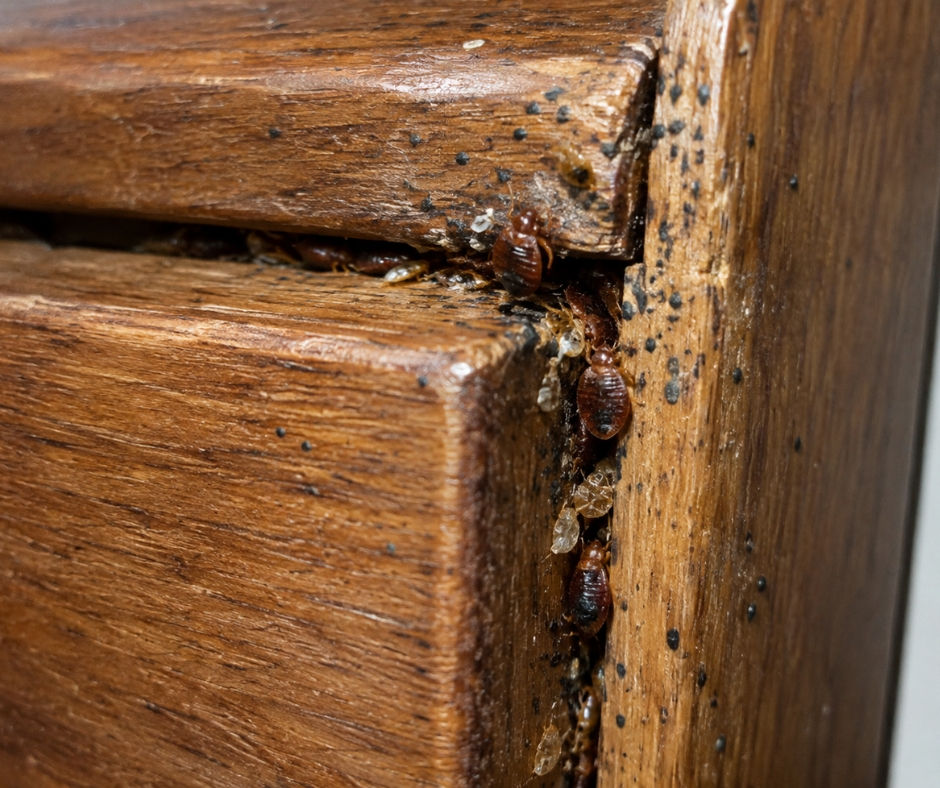
Bed bugs love wood, and they love tight spaces. The tiny gap where your baseboards meet the wall or the floor is a perfect highway and hiding spot for them. Even more surprisingly, they will utilize the recessed screw holes in wooden furniture.
The back of your nightstand, the joints of a wooden bed frame, or the underside of a dresser are all common hiding spots. An untrained eye will easily miss a bed bug tucked deeply into a recessed screw hole, but a professional knows exactly where to shine their flashlight.
Why You Need a Professional Inspection
Bed bugs are masters of evasion. If you only treat the mattress, the bugs hiding in your outlets, behind your art, and in your baseboards will simply wait until it is safe to come out and feed again, restarting the entire cycle.
Don't rely on a DIY fix that only addresses the surface. If you suspect an infestation, contact MKE Bug Pros today. Our meticulous inspections go beyond the bed, ensuring every hidden corner is checked and treated for complete eradication.


Comments